
When Evergreen Pruning Makes Sense
- Evergreen limbs are touching a roof, blocking a walkway, crowding a driveway, or hanging over a fence.
- Dead, broken, or snow-bent branches need selective cleanup without stripping the tree.
- You want to improve clearance or structure while keeping the evergreen's natural form.
What Often Leads To This
- Heavy wet snow can bend or break evergreen branches, especially on exposed northern lots.
- Drought, winter burn, and poor past cuts can leave dead tips, sparse interiors, or one-sided growth.
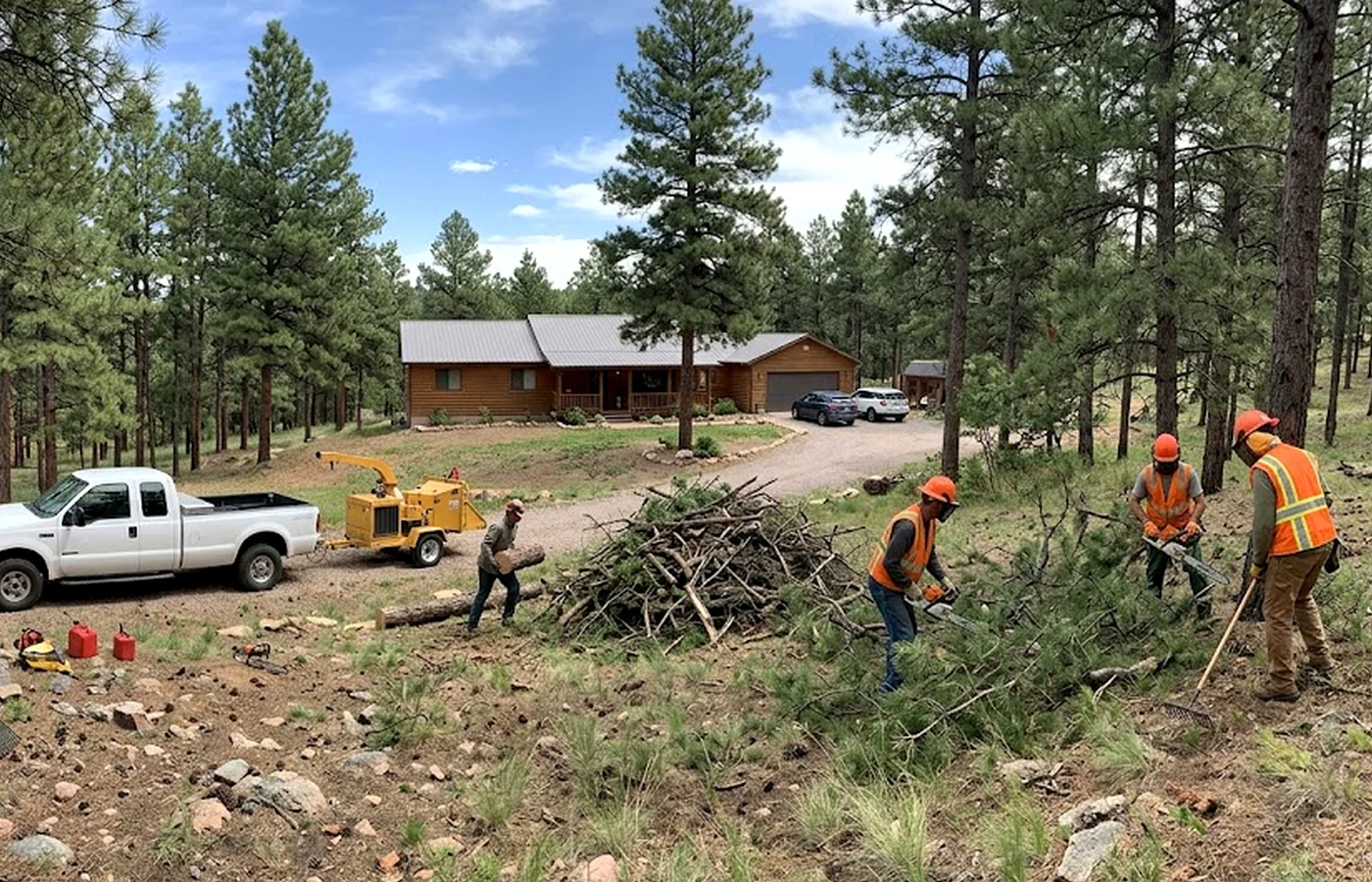
- Foothill and Black Forest properties may also need lower-limb work tied to defensible-space planning.
How We Look At The Job
- Review the tree issue, where it sits, and nearby targets.
- Plan safe equipment placement, cleanup, and debris handling.
- Recommend inspection, pruning, removal, grinding, or follow-up care as appropriate.
- Coordinate the work with clear next steps.
- Share practical follow-up tree-care guidance where useful.
Estimate Factors
Tree work changes from property to property. These details usually affect pricing and scheduling:
- Species, height, branch size, amount of live foliage removed, entry, and whether deadwood is scattered through the canopy.
- Whether the work is clearance, storm repair, health cleanup, or fire-aware lower-limb pruning.
- Debris handling, slope, ladder or lift entry, and nearby roofs, fences, or landscaping.